Nollywood Needs More Than Collaboration to Grow
Collaboration was one of the recurring messages at AFRIFF 2026. But as Nigerian filmmakers aim for bigger audiences and more ambitious productions, how much can partnerships achieve without the financing, infrastructure and government support needed to sustain that growth?
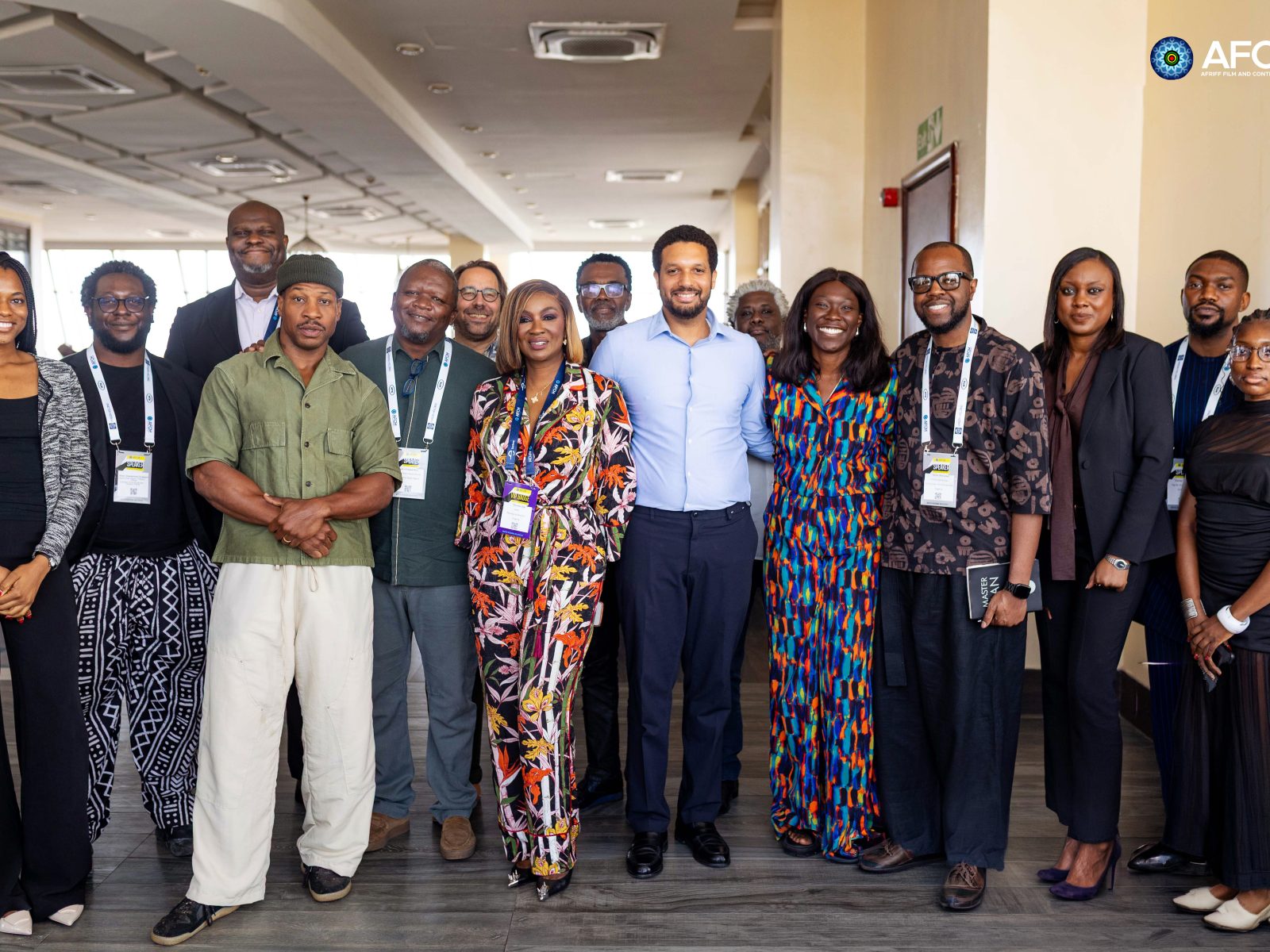
The 15th edition of the Africa International Film Festival (AFRIFF) took place in Lagos from November 1–7, 2026, bringing together filmmakers, actors, producers, distributors, investors and film enthusiasts for a week of screenings, masterclasses, industry discussions and networking. The festival also hosted the Africa Film and Content Market (AFCM), where industry professionals could explore opportunities for financing, distribution and co-production.
Across the conversations I attended, one idea kept coming up: collaboration. Whether the discussion was about taking African films to international audiences, financing bigger productions or building relationships across the continent, there was a strong emphasis on filmmakers working together.
And I agree. There is a lot filmmakers can achieve when they combine their resources, experience and connections.
But during a panel session on financing the creative and film industries, Samer Abdul Samad, an Investment Officer at the International Finance Corporation (IFC), raised another issue that I found particularly important. He called for more deliberate government investment in Nigeria’s film industry and for the sector to be developed as a sustainable business that contributes to the economy.
I was glad someone brought it up.
As I listened to filmmakers from other countries discuss financing, production incentives and international co-production agreements, I started thinking about how much of our conversations around collaboration leave out the systems needed to make those partnerships work.
We can encourage filmmakers to work together, but where do they get the money to make their films? What happens when a production needs facilities or equipment that aren’t readily available? And after spending all that money making a film, how does it reach enough people to earn that investment back?
So, how far can collaboration actually take the Nigerian film industry without the infrastructure and institutional support needed to sustain its growth?
What Are Other Countries Doing Differently?
South Africa offers an interesting example.
Through its Department of Trade, Industry and Competition (the dtic), the government has a Film and Television Production Incentive that helps qualifying local productions recover part of the money they spend making films and television shows in the country.
Under the published programme, qualifying productions can receive a grant calculated at 35% of eligible South African production spending, with an additional 5% available to those that meet further requirements.
These additional requirements include employing Black South African citizens in at least 30% of department-head positions and directing at least 30% of eligible production spending to qualifying Black-owned businesses.
This is important because the incentive isn’t simply about helping producers make films. It is also designed to encourage them to employ local professionals and spend money with local businesses.
And there is evidence of funding reaching productions. According to the dtic, it paid R727.8 million in qualifying claims during the 2024/25 financial year and R503.5 million during 2025/26.
There is also the Eastern Cape Film Investment Fund, managed by the Eastern Cape Development Corporation, which supports commercially viable productions filmed in the province.
According to the corporation, the fund provided R43.1 million to 31 productions between 2019 and 2025. The corporation reported that these productions attracted R521.7 million in total investment, created 9,020 temporary jobs and benefited 696 small businesses.
Some of the productions supported include Gqeberha: The Empire, Survivor South Africa 8, Knuckle City and Homecoming: An African Christmas Story.
The interesting thing about these figures is that the benefits aren’t limited to the people making the films. Hotels, transport companies, caterers, security providers and other businesses can also earn money when productions take place in their communities.
Of course, it isn’t a perfect system.
In August 2026, the dtic acknowledged delays in processing applications and claims. As of June 30, the programme had approximately R255 million in outstanding liabilities, and the department announced a review of its guidelines.
This is worth paying attention to because even when government support exists, it still has to work properly. An incentive that takes too long to pay can create problems for the production companies depending on it.
Morocco has taken a different approach.
Through its Moroccan Cinematographic Centre (CCM), the country offers qualifying foreign film and television productions a cash rebate of 30% of eligible spending in Morocco. In simple terms, productions that meet the requirements can recover part of what they spend making their projects there.
One example is Gladiator II. According to the CCM’s 2024 report, the production had a reported budget of approximately 301 million Moroccan dirhams for its work in the country and received about 72.3 million dirhams in support.
The same report recorded approximately 1.24 billion dirhams in spending by foreign productions in Morocco in 2024, covering films, television and other audiovisual projects.
The intention is clear: give international productions a financial reason to film in Morocco and encourage them to spend money within the country.
South Africa and Morocco are using different strategies, but both recognise that film production can create economic activity beyond the films themselves.
These figures don’t necessarily tell us how profitable the programmes are for the governments running them. What they do show is that public funding and incentives can encourage production spending, employment and business opportunities.
And that brings me back to Nigeria.
So, What Does Nigeria Have?
It isn’t as though Nigeria has no government-backed financing initiatives for the creative industry. There are programmes worth knowing about, although we also need to ask how accessible they are and what they have actually achieved.
One of these is the Creative Economy Development Fund (CEDF), introduced by the Federal Government to provide financing for businesses across the creative sector, including film, television, music, fashion and publishing.
The fund was designed to offer different forms of support, including loans, investments in businesses and grants. This matters because a filmmaker trying to develop a project may need a different type of financing from a production company looking to expand its operations or buy equipment.
Its second phase, launched in August 2025, prioritised smaller businesses seeking funding of up to US$100,000. The official CEDF website continues to advertise an extended application window for this phase.
According to the government’s original rollout plan, disbursements for the second phase were expected to begin from April 1, 2026.
However, there is an important difference between announcing when funding will begin and showing how much money has actually reached businesses.
I could not establish from the publicly available information how much the fund has disbursed, how many applicants have received financing or how much has gone specifically to film and television.
That doesn’t mean no money has been paid. It means there isn’t enough publicly accessible information to properly assess the results.
If a fund is meant to support creative businesses, filmmakers should be able to find out how it works, how many people have benefited and what stage the application process has reached.
Another option is the Nigerian Export-Import Bank’s Nigerian Creative and Entertainment Industry Loan Scheme.
This scheme covers film production, distribution and exhibition, as well as production facilities and equipment. Depending on the project, the loan can run for up to seven years.
But accessing it requires paperwork.
Applicants must operate registered Nigerian companies and may need to provide business plans, audited financial statements, production budgets, evidence of distribution arrangements and other documents. Where a filmmaker wants to use the rights to a film or another creative work as security for a loan, a valuation report may also be required.
For an established production company with financial records and distribution relationships, these requirements may be manageable.
For an independent filmmaker with a promising project but limited financial resources and experience dealing with banks, it could be much harder.
The bank’s website explains the scheme and its requirements, but I could not establish from the information publicly available how much financing has reached film businesses, how many productions have benefited or how long successful applications typically take.
These are important questions because the existence of a financing programme doesn’t automatically mean filmmakers can access it.
And while financing is important, making a film is only half the business. Filmmakers also need somewhere to show it.
We Have a Distribution Problem That Needs Solving
Nigeria’s cinema market continues to attract audiences, but access to cinemas remains uneven across the country.
According to FilmOne’s 2025 Nigeria Box Office Yearbook, Lagos had 41 cinema locations and accounted for more than half of Nigeria’s box office revenue that year.
This means a filmmaker releasing a movie in cinemas is working within a market where a large share of ticket sales comes from one state.
For someone living in Lagos, there may be several cinemas to choose from. For someone in a city with fewer cinema options, watching the same film on the big screen may require a much longer journey, assuming it is showing nearby at all.
And for filmmakers, this affects how many people they can reach and how much money they can potentially earn.
A film’s commercial performance depends on more than whether audiences enjoy it. The number of cinemas showing it, how long it stays on their screens, ticket prices and competing releases all make a difference.
Of course, cinemas are not the only way to distribute films.
Television networks, streaming platforms, YouTube and international distributors can also help filmmakers reach audiences. But these options have their own challenges, particularly as major streaming companies have become more selective about commissioning African productions.
A filmmaker may successfully raise money, assemble a team and complete a good film, only to struggle with finding enough places to show it or buyers willing to pay for it.
This is why discussions about supporting film production also need to consider distribution. If we help more filmmakers make films without expanding the ways those films reach audiences and generate revenue, we leave a significant part of the business unresolved.
And this is another area where collaboration with companies in other countries could help.
Collaboration Needs Something to Work With
International partnerships can give filmmakers access to additional financing, technical expertise, equipment, talent and distribution opportunities.
But working with a company in another country can become complicated when there are no clear agreements explaining how those partnerships should operate.
This is one reason countries sign formal co-production agreements.
A co-production agreement creates a framework for producers from two countries to make films together. Depending on its terms, an approved film can be recognised as a national production in both countries, potentially allowing the producers to apply for certain benefits available in each market.
South Africa has formal co-production agreements with countries including Canada, the United Kingdom, France, Germany, Italy and Australia.
These agreements don’t mean every filmmaker automatically receives funding. They establish a process through which qualifying projects can seek official recognition and the benefits attached to it.
Nigeria has also taken steps in this direction.
In June 2025, Nigeria and Brazil signed a formal audiovisual co-production agreement covering films, television programmes, documentaries and other audiovisual works.
The agreement identifies the Nigerian Film Corporation and Brazil’s National Cinema Agency (ANCINE) as the institutions responsible for overseeing its implementation. It also outlines how producers can seek approval for qualifying co-productions.
This is more substantial than simply announcing that filmmakers from both countries should collaborate.
However, signing an agreement and bringing it into operation are not the same thing.
In its review of international co-productions published in 2025, ANCINE listed the Nigeria agreement among those awaiting entry into force. Nigeria was also absent from the agency’s published list of active bilateral co-production agreements updated in November 2026.
So, what remains to be done before Nigerian and Brazilian producers can use the agreement? When will the relevant institutions begin accepting applications under it? And how will filmmakers know what benefits are available to them?
These are the kinds of details that determine whether an agreement becomes a practical opportunity or remains something producers hear about without knowing how to use.
Where Does That Leave Us?
The conversations at AFRIFF made a strong case for filmmakers to work together, share resources and build relationships across the continent. I agree that these partnerships are important and can open doors that might otherwise remain closed.
But those conversations also reminded me that filmmakers cannot be expected to solve every industry challenge through individual effort.
Government support doesn’t mean deciding which stories filmmakers should tell or how they should tell them. It means helping create an environment where film businesses can access financing, production facilities, skilled professionals and opportunities to reach audiences.
There is also an economic argument for doing this. According to the Nigerian Investment Promotion Commission, the country’s wider creative economy is valued at approximately US$6.4 billion. Film and television are part of that economy, alongside music, fashion, publishing and other creative businesses.
Supporting film production can therefore create opportunities beyond the people working directly on a project, from equipment rental companies and post-production studios to hotels, transport providers and other businesses.
But announcements alone are not enough.
We need to know how much of the financing being announced is actually getting to filmmakers, whether existing facilities and distribution networks are meeting the industry’s needs, and what progress has been made on international agreements intended to create new opportunities.
The institutions responsible for these initiatives should be able to provide those answers.
Nigerian filmmakers have spent decades finding ways to make films despite the limitations around them. Their resourcefulness has helped build an industry that reaches audiences around the world.
But if that industry is to grow beyond individual successes, we need to pay as much attention to the systems around filmmakers as we do to the partnerships they build.
Share your take