What Exactly Was Home Video?
From VHS tapes to the dramatic movie covers, Nollywood’s home video era was one for the books. Find out what led to millions of Nigerians watching Nollywood films from the comfort of their homes.
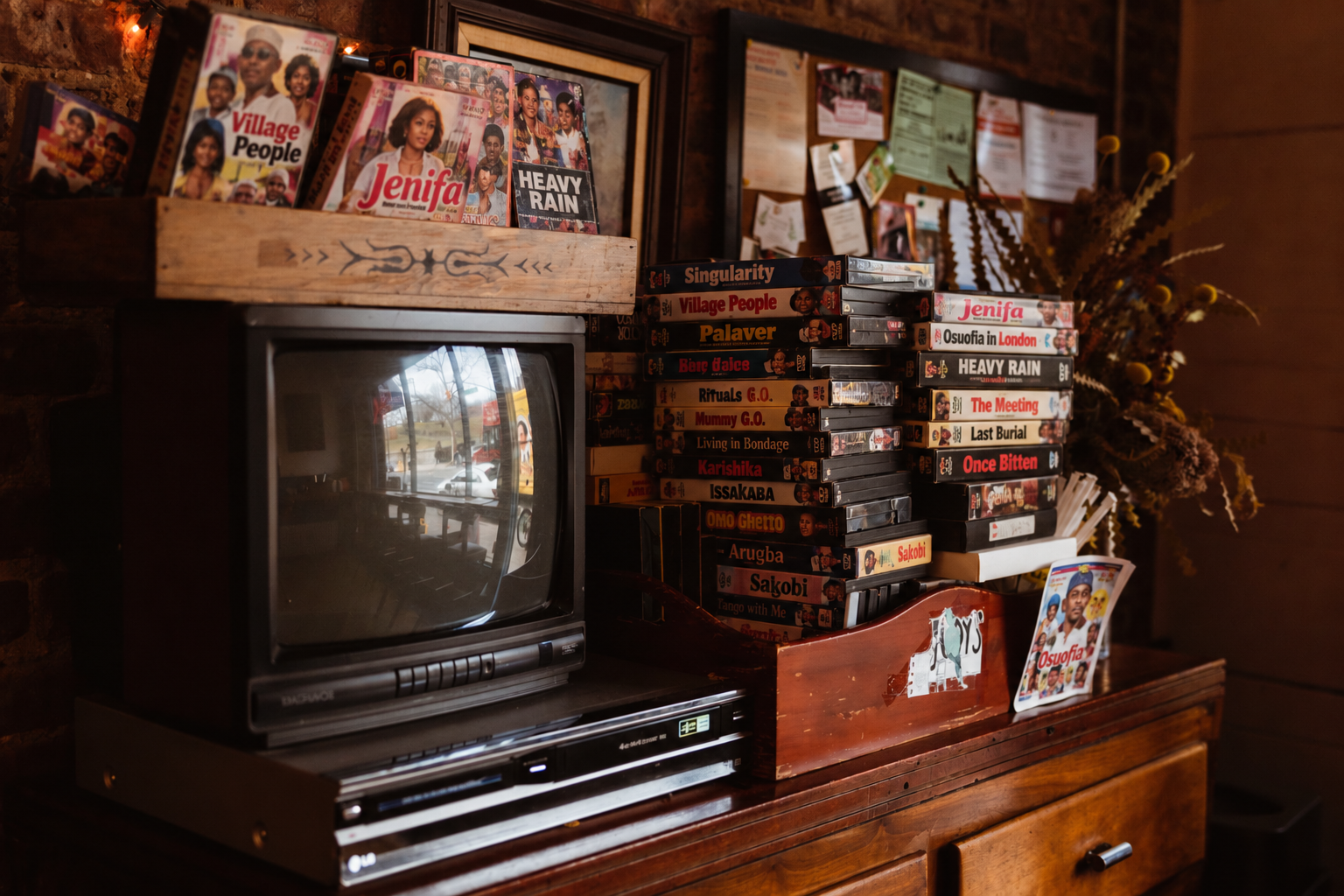
Picture this. It’s the ’90s. NEPA has just restored electricity, and cries of “Up NEPA!” are ringing across the neighbourhood. The family gathers around the television. Someone pops in the cassette borrowed from next door. It’s Part 2, and after how things ended yesterday, everyone needs to know what happens next.
Welcome to the home video era. Where films filled with tall tales, life lessons and drama traveled from local shops to sitting rooms, keeping entire households glued to their televisions.
If you grew up during this era, or have parents who did, you’ve probably heard of things like VHS, video cassettes, CDs and DVDs. But how did we get there? How did home video become such a big deal in Nigeria?
Let’s rewind a bit. And yes, we’re going all the way back to theatre.
Before Home Video, There Was Theatre
In the 1970s, filmmakers like Hubert Ogunde and Moses Olaiya (popularly known as Baba Sala) helped bring theatrical traditions and indigenous stories to the screen. Meanwhile, filmmakers like Ola Balogun were exploring ways to translate these stories and performances into films.
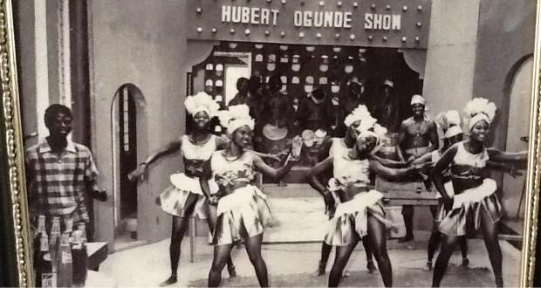
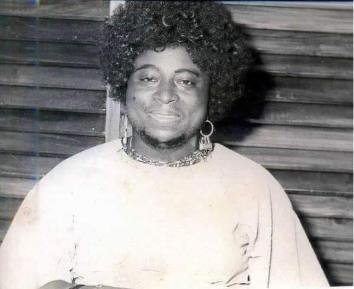
The travelling theatre troupes had spent years entertaining audiences on stage, and the move into film offered another way to reach audiences at home and abroad. After all, why limit a good story to the people who could show up at a performance?
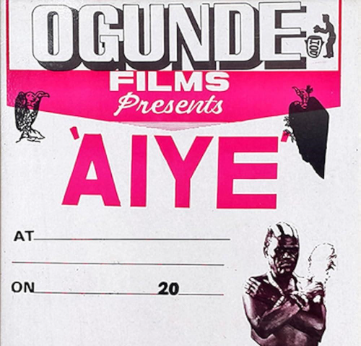
Films like Ola Balogun’s Ajani Ogun (1976), made with Yoruba theatre practitioner Duro Ladipo, and Hubert Ogunde’s Aiye (1980), a supernatural thriller centred on witchcraft, demonstrated the possibilities of bringing indigenous stories to the screen. They helped pave the way for the growth of Yoruba-language cinema. But there was a little problem. Making films was expensive.
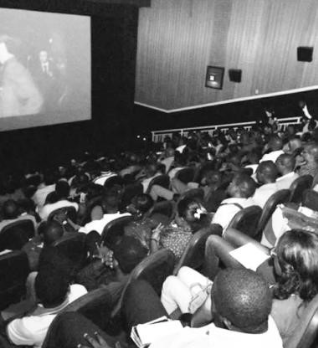
Celluloid filmmaking required significant investment in film stock, processing, equipment and distribution. Filmmakers also needed cinemas where audiences could watch their work and a reliable way to make their money back.
Then came the economic downturn of the 1980s.
Nigeria’s film industry faced serious financial and infrastructural challenges. Cinema halls and production facilities began closing or became less viable, while the effects of economic policies, including structural adjustment, made an already difficult situation worse.
For many filmmakers, producing a film became an increasingly expensive gamble. And when production costs are high and your avenues for making that money back are shrinking, well, you can imagine the problem.
Some filmmakers adapted by exploring cheaper production methods, including reversal film stock, which produces a positive image directly rather than requiring the conventional negative-to-positive printing process. Video also became an alternative as the industry struggled to sustain celluloid production.
However, these alternatives did not immediately solve the problem of producing films at scale. According to Adesanya (1997, p. 40), Nigerian celluloid feature-film production averaged just four films a year during the 1980s.
Not much for an industry.
That is, until video filmmaking began changing the rules.
Welcome to the ’90s. The Decade of Videographers.
Now, before you start thinking about the people who film weddings and birthday parties with their cameras today, that’s not quite what we’re talking about here.
You might be wondering: what’s the difference between the filmmakers and videographers of that time? Didn’t they all make movies?
Yes, they did. The difference was in the name.
Well, sort of. The real difference was in how those movies were made.
Traditional filmmakers largely worked with celluloid, while the emerging video-film model allowed producers to record their films directly onto video. Instead of relying on the more expensive process of shooting on film stock and preparing prints for cinema exhibition, they could work with video technology and distribute their films on videocassettes.
And that seemingly small difference would change a lot.
Remember the problem we just discussed? Producing films was expensive, and getting them in front of audiences wasn’t always easy. Video offered a more accessible alternative, allowing producers and marketers to make films for a growing audience without depending entirely on the traditional cinema system. Instead of making a film primarily for theatrical exhibition, they could produce it for people to buy, rent or watch at home.
Hence the name, home video.
And just like that, the industry had found another way to get Nigerian stories into Nigerian homes.
Enter Living in Bondage
Although video filmmaking already existed towards the end of the pioneer filmmaking era, we can’t talk about the home video era without talking about Kenneth Nnebue and Living in Bondage.
Nnebue was a businessman and video marketer who, according to a widely repeated account of the film’s origins, imported empty videocassettes from Taiwan but struggled to sell them. So, he experimented with recording local content on the tapes, resulting in Living in Bondage, directed by Chris Obi Rapu, written by Nnebue and Okechukwu Ogunjiofor then released in 1992.
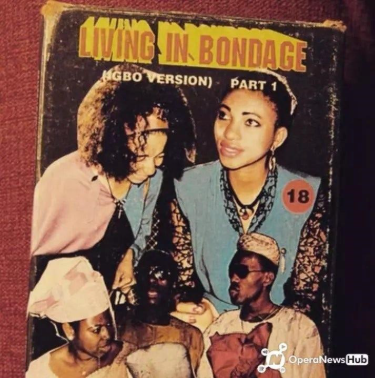
And what started as a business problem became a major moment in Nigerian film history.
The film’s success demonstrated just how much potential there was in producing Nigerian films directly for the video market. But it wasn’t just the story that made a difference. It was also how the film was packaged and sold. Film scholar Noah Tsika notes that Living in Bondage was professionally marketed on shrink-wrapped videocassettes featuring the names and faces of its stars.
Think about that for a second. This wasn’t just someone recording a film and hoping people would watch it. There was a product, there was marketing, there was a distribution strategy, and people were buying it.
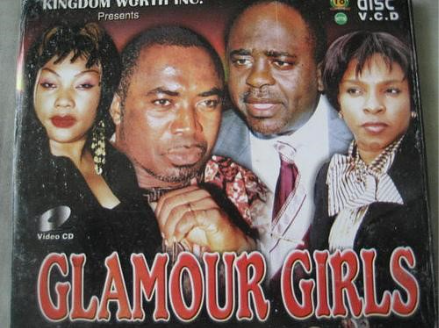
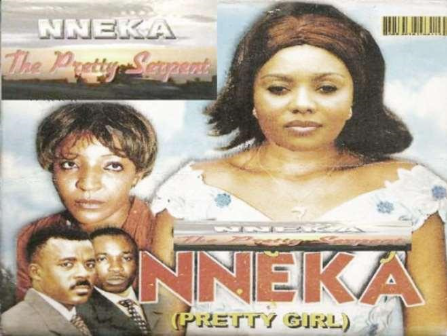
The film’s commercial success encouraged more marketers and entrepreneurs to invest in video-film production. Other popular releases followed, including Glamour Girls in 1994, and more producers began exploring the possibilities of the growing market. The industry had found a more accessible way to make films, and audiences were ready for them.
From a Few Films to an Entire Industry
Here’s where things get really interesting.
According to the Open University’s Nollywood research project, by the late 1990s, more than 20 Nigerian video films could be released in a week.
Twenty. In. A. Week.
Compare that with the earlier production model, which struggled to sustain a steady flow of films, and you begin to understand just how much of a victory this was.
More films meant more stories, more actors becoming household names, and more opportunities for Nigerians to see their own experiences reflected on screen.
Now, were they all the best quality? Not necessarily, but that was not important. We were finally telling our own stories and getting them into people’s hands.
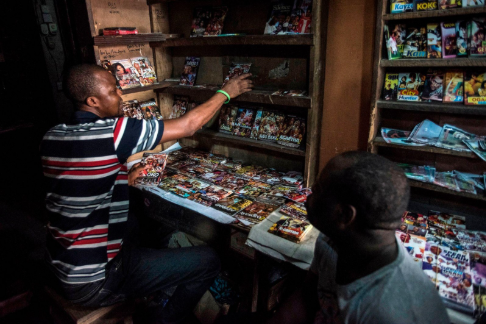
Markets and independent traders became central to the industry’s growth. Markets like Lagos’s Idumota became important hubs for the video-film business. Producers and marketers worked with wholesalers, retailers and video vendors to get films into circulation. These people were a crucial part of the business model that made producing so many films possible. Because, a filmmaker could produce a movie, but what good was that movie if nobody could find it?
The distribution network connected the people making the films to the people buying them. And unlike the traditional cinema model, this didn’t require audiences to travel to a cinema hall or producers to depend entirely on theatrical releases to make money.
The film could go from the producer to the marketer, from the marketer to the retailer, and from the retailer to your sitting room. Or your neighbour’s sitting room. Or that one aunty who somehow had every new release before everybody else.
And that is what made the model so powerful. It created a way for films to reach audiences through everyday commercial networks that already existed, rather than waiting for a formal cinema system to do the job.
Of course, it wasn’t a perfect system. But it worked well enough to help an industry grow at an extraordinary pace.
The industry didn’t need to wait for a fully developed studio system or a nationwide cinema chain to get its films to audiences. It had traders, vendors and an audience ready to buy or rent the next big release.
You could buy a film, rent it, borrow it or watch a copy that had already passed through several hands. And because films were now accessible outside cinema halls, more people could watch them on their own terms which brings us back to your neighbour and that borrowed cassette.
When Everyone Could Watch, Who Was Getting Paid?
Remember how we said you could borrow a cassette from your neighbour instead of buying one?
Well, imagine that happening on a much bigger scale.
Videocassettes could be copied, and those copies could be resold or shared. Once a film started circulating through different hands, it became harder to track every copy and transaction, let alone ensure that the people who made the film benefited from every sale.
Of course, not every informal transaction was piracy. The same vendors, markets and rental networks that helped films reach audiences were essential to the industry’s success. The problem was unauthorised copying and the difficulty of capturing revenue across a sprawling distribution system. More people could watch the films, but that didn’t necessarily mean more money was making its way back to the producers.
And that was the irony of the home video boom. The distribution system that helped the industry grow also created challenges around copyright, revenue and sustainability. But Nigerian filmmakers and distributors have never been particularly short on finding another way to reach an audience.
As television channels expanded their programming, cinemas remained an important way to watch Nigerian films, and eventually, digital platforms opened up even more possibilities. The way Nigerians watched films continued to change, and so did the business of getting those films to us.
But that’s the thing about Nigerian cinema. The story never really stops at how we watch. It’s also about how we find new ways to tell our stories and get them out there.
The home video era was more than VHS tapes, dramatic movie posters and films watched in the sitting room. It was a major shift in the economics of Nigerian storytelling. Proof that there was a market for stories told by Nigerians, and that the industry could find new ways to meet that demand.
Share your take