Adanne Delivers a Poignant Multigenerational Tale of Mothers, Daughters, and Womanhood
Orobosa Ikponmwen’s feature debut follows three generations of Igbo women, exploring the unfairness, resentment and love that can pass between mothers and daughters.
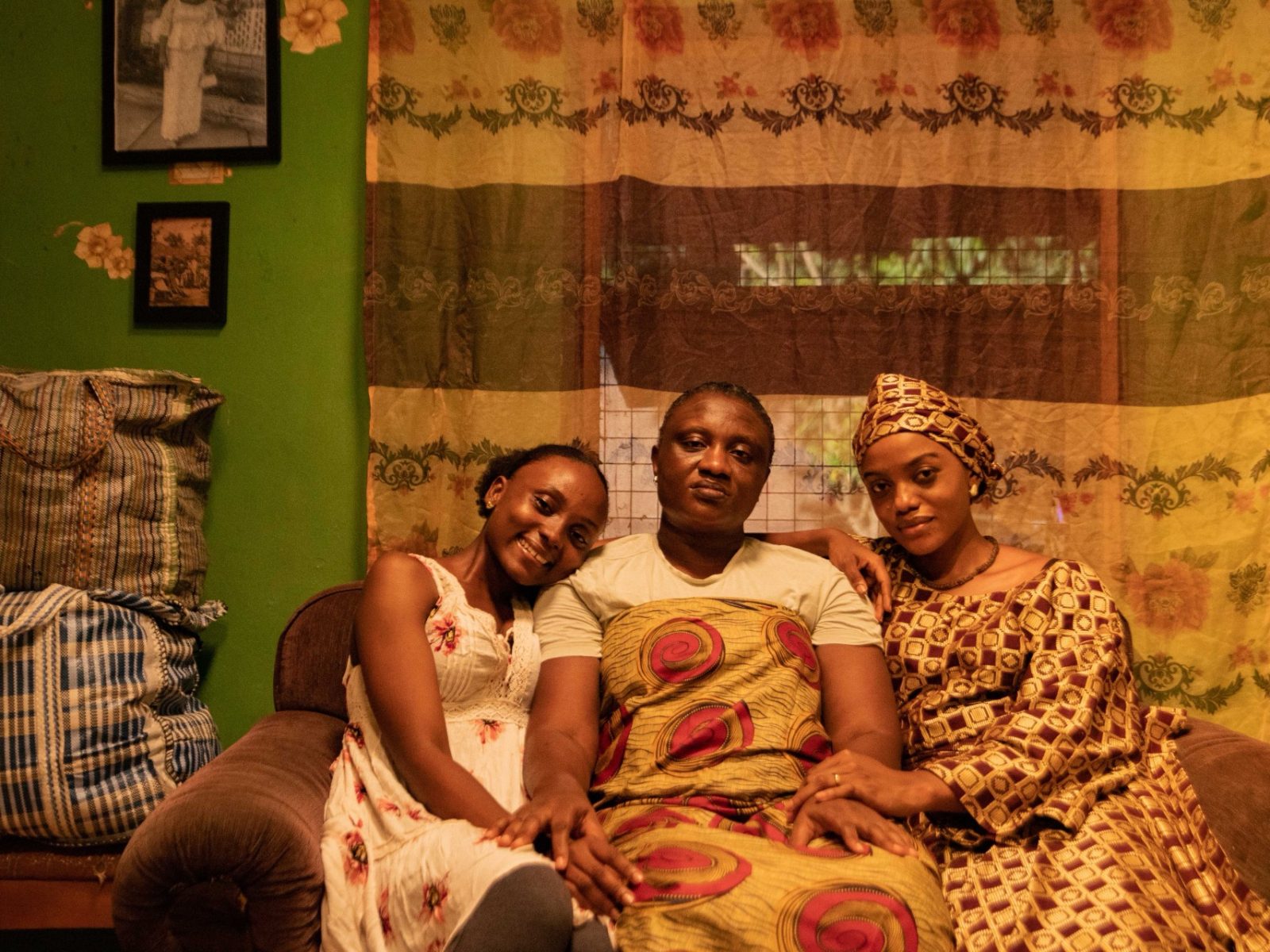
Sometimes a daughter’s biggest enemy is her own mother. Or at least, that’s how it plays out for the titular character in Orobosa Ikponmwen’s directorial feature-length debut.
In 1973, a baby girl is born to the delight of everyone present, including her mother, Akachi (Jennifer Umenwa). In 1996, another girl is born, this time to considerably less excitement. The former is Ijeoma (Onyinye Odokoro), and the latter is Adanne (Somachi Chilaka), her daughter. Thus begins Ikponmwen’s multigenerational tale of three Igbo women, jumping between the past and present as it takes us inside their lives.
| Film | Adanne |
| Director | Orobosa Ikponmwen (feature-length directorial debut) |
| Writer | Gold Gerry |
| Starring | Jennifer Umenwa, Onyinye Odokoro, Somachi Chilaka and Kelvinmary Ndukwe |
| Costume design | Elvis Uwagbenebi |
| Languages | Igbo and English |
| Screened at | Africa International Film Festival (AFRIFF) 2026 |
A Story About Unfairness and Three Generations of Women
Adanne is a story about mothers and daughters, and, at its core, a story about unfairness: the unfairness that can come with being a woman, a mother, a single mother, a daughter, a provider, or a sister. For all the beauty of the bond between mother and daughter, it can be fraught with resentment borne out of frustrating circumstances, something screenwriter Gold Gerry understands all too well, judging by the story she has written.
The film begins with Akachi, who endures the jibes and condescension that come with being a single mother. Then there’s Ijeoma, who finds herself in a marriage that seems to weigh her down and with a daughter who can seemingly do nothing to please her. Finally, there’s Adanne herself, who is relegated to living in her brother’s shadow and bearing the brunt of her mother’s ire.
The Performances
Nuanced characters on paper only resonate when their portrayals stand out, and all three generations of women deliver, thanks to the actors bringing them to life. Jennifer Umenwa’s Akachi is kind and devoted to her daughter, with a wealth of maternal love that beams out from the screen. Onyinye Odokoro’s Ijeoma starts out wide-eyed and hopeful, girlish and in love with Daniel (Kelvinmary Ndukwe), who eventually becomes her husband and the father of her children. Somachi Chilaka’s Adanne is a young girl dealing with the pressures of an overbearing mother in whose eyes she can do very little right.
Why Is Ijeoma So Hard on Adanne?
The film makes the viewer wonder what could have gone wrong. Ijeoma was loved by her mother, so why doesn’t she show that same depth of affection for her own daughter? But Ijeoma’s case isn’t so straightforward. When she gives birth to Adanne, she is visibly disappointed, as is Daniel.
It’s particularly sad that Adanne should become her mother’s biggest disappointment when Ijeoma herself was once her mother’s greatest joy. One could argue that Ijeoma is simply a bad mother, although that would be a reductive assessment. Before her marriage to Daniel, and during its early stages, Ijeoma is happy. She and Daniel don’t have much, but they’re thrilled to be together. Even when he loses his job and she becomes the sole breadwinner, their relationship appears to remain largely unchanged, although Daniel seems increasingly tired. When Ijeoma becomes pregnant, they’re excited about the baby, hopeful that it will be a boy.
They get their wish when Adanne’s younger brother, Godwin, is born. One mustn’t pick favorites with children, but we, the audience, aren’t the parents, and the film makes it clear that Adanne is the more accomplished of the two. She gets better grades and is more obedient, which makes it all the harder to watch her mother, and occasionally her father, prioritize Godwin over her. One example comes when Adanne’s teacher speaks to Daniel about her taking the WAEC exams early. His initial response is joy, followed almost immediately by a question about how Godwin is doing. When the teacher confirms that both children are doing well, Daniel asks if Adanne can postpone her exams so that Godwin, who is a class below her, can sit for them at the same time.
It isn’t just Ijeoma who makes life difficult for Adanne. In one harrowing scene, Adanne stays out with her friends after school and returns home late. Her father punishes her cruelly and humiliatingly for it. What stays with you, though, is Ijeoma’s silence. Visibly disturbed, she does nothing to speak up for her daughter, and the film lets that inaction weigh on her face as heavily as the punishment itself.
Moving Between Timelines
Given that it’s a story told across multiple timelines, Adanne jumps back and forth between the past and present, and the cuts between eras can feel abrupt. Films that move through time usually give us something to hold onto, whether a transitional shot, a visual cue, or some other signal that we’re going back or forward. Here, it isn’t always immediately clear which period we’re in. Still, the approach ultimately works. Costume designer Elvis Uwagbenebi helps anchor each era, dressing the characters in clothing that reflects the different periods, from the ’70s and ’90s to the 2010s.
The actors do a terrific job of inhabiting these periods and their characters at different points in their lives. Onyinye Odokoro is the standout, going from young and hopeful to jaded and hardened over the years, perfectly capturing each stage of Ijeoma’s life. Kelvinmary Ndukwe as Daniel is at times hilarious and at others menacing, playing both a doting father and an ungrateful husband. He and Odokoro play their roles so convincingly that their characters’ marriage feels entirely believable onscreen. Daniel is a failed businessman, while Ijeoma is the one holding the household together, which goes a long way toward explaining how their marriage sours. In one scene, the children are sent home from school over unpaid fees, an unusual occurrence given that their mother always pays. We later learn that Daniel has spent the money on a business venture.
Dialogue and Direction
One of the film’s standouts is its dialogue. Delivered in both Igbo and English, it never feels stilted. Instead, it sounds like people talking rather than actors reciting a script. Whether it’s Ijeoma’s disappointment at the birth of her daughter, Akachi falling in love with a man she cannot have, Adanne experiencing young love for the first time, or Daniel expressing fatherly affection and admiration for his children while cracking corny jokes, these moments feel lived-in. Much of the credit goes to Ikponmwen, who gives the performances room to breathe, nowhere more so than in the scenes between Ijeoma and Daniel. Watching them young and in love, then seeing them again years later, tired, bickering, and, in Ijeoma’s case, perhaps no longer in love, we feel how far they have drifted from each other. Ikponmwen shows the same care in how she frames the family together, as in the morning devotion and other scenes at home.
Final Thoughts
Adanne is never entirely bleak. Akachi’s devotion to her daughter shows how much joy motherhood can hold, and the film sets that alongside what the same role can cost a woman: the condescension aimed at a single mother, the strain on the one who provides for everyone, and the resentment that can pass from mother to daughter. We might not find ourselves in every one of these positions, or ever occupy them at all, but we know women who have, and that makes it no less important to empathize with them.
More from our AFRIFF coverage: Everything We Watched at AFRIFF 2026 and our review of The Spectacular Death of Prisca.
Please share your take if you've watched Adanne. If you haven't, no rating needed — it helps keep the ratings honest for everyone.
Leave a review